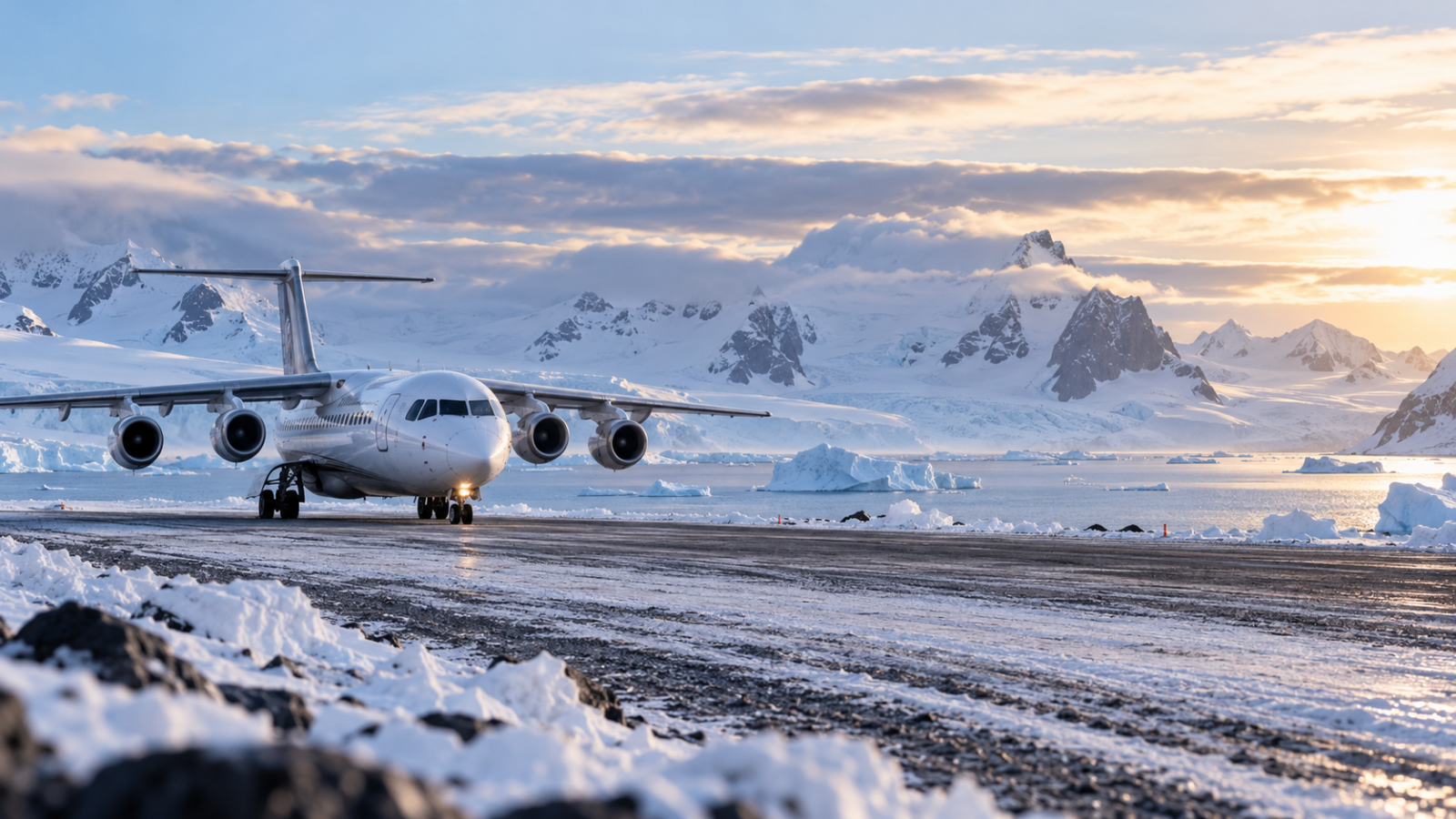
Flying across the Drake Passage can save travellers several days at sea, but Antarctic flights come with an important consideration: they operate according to the weather, not simply the published itinerary.
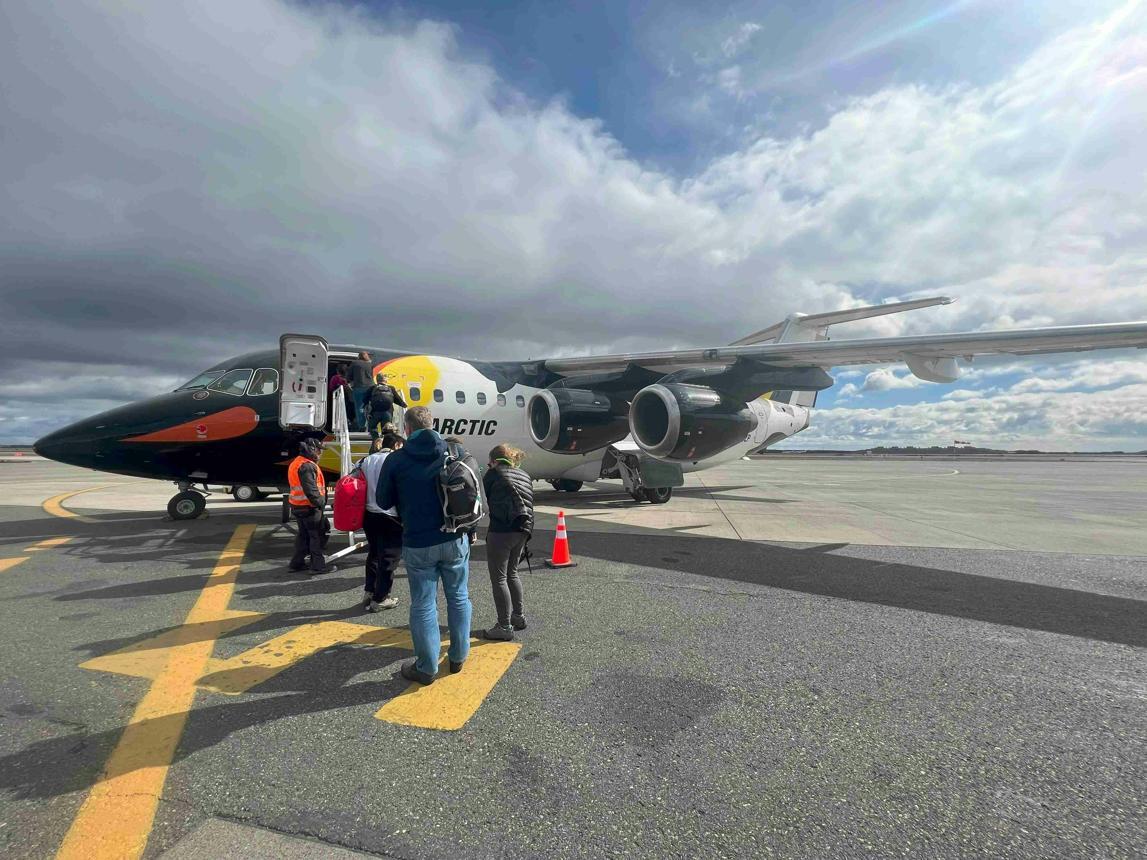
For travellers who would prefer to avoid sailing across the Drake Passage, an Antarctic fly-cruise offers an appealing alternative. Instead of spending approximately two days at sea in each direction, selected expedition programmes use charter flights to reach the South Shetland Islands, where passengers join their expedition vessel.
One of the established routes connects Punta Arenas in southern Chile with King George Island, near the Antarctic Peninsula. The flight generally takes around two hours.
However, Antarctic aviation operates in a particularly challenging environment. Strong winds, low cloud, fog and changing runway conditions can affect whether an aircraft can safely land or depart.
This means a flight may be delayed, brought forward or occasionally cancelled.
For anyone considering an Antarctic fly-cruise, understanding how these disruptions are managed is just as important as comparing the ship, itinerary or cabin category.
Why Are Flights to Antarctica So Weather-Dependent?
Flying to Antarctica is very different from travelling between major international airports.
King George Island, one of the main gateways for Antarctic expedition air-cruises, has a relatively basic airfield compared with large commercial airports. Aircraft operations depend heavily on suitable visibility, wind and runway conditions.
Three factors are particularly important.
1. Visibility at the Antarctic airfield
Low clouds, fog and snowfall can make it difficult for pilots to see the runway and surrounding terrain.
Unlike many major international airports, where sophisticated instrument approach systems can support landings in reduced visibility, operations at King George Island depend on adequate visual conditions.
A flight may therefore be unable to land even when the aircraft itself is ready and conditions at the departure airport are favourable.
2. Wind and runway conditions
Strong winds, particularly when accompanied by gusts or unfavourable wind direction, can affect take-off and landing operations.
Snow, ice and other surface conditions may also influence whether the runway is suitable for use.
These decisions are based on the aircraft’s operating requirements and the conditions at the time, rather than a fixed threshold that applies to every flight.
3. Rapidly changing weather
Weather conditions in the South Shetland Islands can change quickly.
A forecast suggesting suitable flying conditions in the morning may deteriorate before the aircraft is ready to depart.
Equally, a previously unsuitable forecast may improve and create an opportunity to operate the flight.
For this reason, flight schedules are sometimes adjusted at relatively short notice.
An important point to understand: Clear skies in Punta Arenas do not guarantee that an aircraft can safely land on King George Island.
What Happens If Your Flight to Antarctica Is Delayed?
Consider a traveller who has arrived in southern Chile, completed the required expedition briefing and is preparing to fly to Antarctica the following day.
The weather at King George Island deteriorates overnight, and the aircraft cannot safely land.
Rather than proceed with the flight, the expedition team must wait for suitable conditions.
The exact arrangements depend on the programme’s contingency plan, but several scenarios are possible.
Remaining at the departure location
Passengers may be required to stay in their departure city while the expedition team monitors weather forecasts and coordinates with the flight operator.
Depending on the programme, additional accommodation, meals or organised activities may be provided during the waiting period.
These services should not be assumed to be included automatically. Travellers should check the specific provisions of their booking.
Being placed on standby
Antarctic weather windows can develop unexpectedly.
When this happens, an expedition team may need passengers to be ready to leave for the airport with limited notice.
This is why a delayed flight does not always mean travellers can spend the day sightseeing independently.
They may need to remain contactable and follow instructions about when and where to assemble.
Changes to the expedition itinerary
A delayed outbound flight can affect the amount of time available for exploring Antarctica.
If the voyage still proceeds, the expedition team may need to adjust its planned activities or route.
Whether time in Antarctica is reduced depends on the length of the delay, the itinerary’s flexibility and the arrangements available to the operator.
A delay does not automatically mean that an entire expedition day will be lost, but neither can the original schedule be guaranteed.
Can a Flight to Antarctica Leave Earlier Than Planned?
Yes. This is one of the less obvious aspects of Antarctic fly-cruises.
If weather forecasts indicate that suitable flying conditions are available earlier than expected, an operator may bring a flight forward rather than risk waiting for deteriorating conditions.
This can happen at the beginning or end of an expedition.
For example, an outbound flight originally planned for the second day of a programme may be moved to an earlier departure window, provided the arrangements and conditions allow it.
This is one reason Antarctic fly-cruise programmes often have strict arrival requirements and mandatory pre-flight briefings.
Travellers should not assume they can arrive late simply because their charter flight appears to be scheduled for the following day.
The practical lesson: Always follow the required arrival time stated in your expedition documents, and consider arriving earlier when connecting from overseas.
What Happens If the Weather Prevents the Expedition From Starting?
Most weather delays are temporary, but prolonged unsuitable conditions can sometimes prevent an outbound flight from operating within the time available.
At that point, an expedition may have to be cancelled.
However, there is no single cancellation deadline or refund policy that applies to all Antarctic fly-cruises.
Each programme has its own terms concerning how long flights will be attempted, when a voyage may be cancelled and what financial arrangements apply.
Before booking, travellers should establish:
How long the expedition may wait for suitable flying conditions.
Whether accommodation and meals are included during a delay.
Whether the itinerary can be shortened and, if so, how this is addressed.
What happens if the outbound flight never operates.
Which payments may be refunded and which expenses remain the traveller’s responsibility.
A refund of an expedition fare, where provided under the booking conditions, does not necessarily cover independently booked international flights, accommodation or other travel expenses.
This is why reviewing the contingency arrangements before booking is so important.
What If the Return Flight From Antarctica Is Delayed?
Weather disruption is not limited to the beginning of an expedition.
Travellers who fly back to South America at the end of their cruise can also experience delays if conditions at the Antarctic airfield are unsuitable.
In this situation, passengers may need to remain aboard their expedition vessel until the flight can operate.
Depending on the circumstances, the vessel may continue operating in a suitable nearby area while the expedition team waits for an opportunity to disembark passengers.
A return flight may also be brought forward if forecasts suggest that a later departure would be more difficult.
In prolonged disruptions, some expedition programmes provide for an alternative return by sea.
However, this is not a universal arrangement. Whether a sea return is possible depends on the vessel, its position, the time available, prevailing conditions and the operator’s contingency provisions.
For travellers, the most important consideration is that a delayed return flight can affect onward connections and arrangements after the expedition.
Does Flying One Way Reduce the Risk of Weather Delays?
Antarctic expeditions generally fall into several categories, depending on how passengers cross the Drake Passage.
Expedition type | Travel arrangement | Weather-related consideration |
|---|---|---|
Fly/Fly | Fly to Antarctica and fly back to South America | Both flight sectors depend on suitable weather |
Fly/Sail | Fly to Antarctica and return by ship | The outbound Antarctic flight is weather-dependent |
Sail/Fly | Sail to Antarctica and return by air | The return Antarctic flight is weather-dependent |
|
Sail/Sail | Travel across the Drake Passage by ship in both directions | No Antarctic charter flight is required, although sea and ice conditions can affect the voyage |
A one-way flight itinerary reduces the number of Antarctic flight sectors compared with a fly/fly programme.
However, it does not eliminate the possibility of flight disruption.
For example, travellers choosing a sail/fly expedition may have completed their Antarctic exploration but still need to wait for suitable weather before flying back to South America.
Those choosing fly/sail may encounter a delay before their Antarctic experience begins.
The best choice depends on whether a traveller is more concerned about time at sea, the possibility of seasickness, schedule flexibility or the overall expedition experience.
It is also important to remember that not every combination is offered on every departure.
How Can Travellers Prepare for Antarctic Flight Disruptions?
Although the weather cannot be controlled, travellers can make informed decisions that reduce the practical consequences of a delay.
Allow additional time around your expedition
Avoid arranging tight international flight connections immediately after your scheduled return.
Allowing extra time provides some flexibility if your Antarctic flight is delayed.
The appropriate amount of additional time depends on the expedition and your onward travel arrangements. Even several buffer days cannot guarantee protection against every possible disruption.
Understand the contingency plan before paying a deposit
A contingency plan should explain how an expedition manages flight disruptions and what passengers can expect if the published schedule changes.
Pay particular attention to accommodation arrangements, meals, cancellation provisions, refunds and responsibility for additional expenses.
These details can be more important than they initially appear when comparing two otherwise similar expeditions.
Check your travel insurance
Antarctic expedition travel requires careful attention to insurance coverage.
Travellers should review whether their policy provides suitable protection for cancellation, travel delays, missed connections, additional accommodation and trip interruption.
Coverage varies between policies, and some circumstances may be excluded.
Check that your insurance is appropriate for the activities and destinations included in your itinerary, and obtain clarification from the insurer where necessary.
Consider flexible onward travel arrangements
Where practical, flexible or changeable airline tickets may be worth considering.
They may reduce the cost or difficulty of adjusting onward travel if your expedition ends later than expected.
However, travellers should still check fare conditions, change fees and availability.
Follow pre-expedition instructions carefully
Mandatory briefings, arrival deadlines and baggage requirements are part of the expedition’s operational arrangements.
They should not be treated as optional.
Missing a required arrival time could create difficulties if a suitable flying window becomes available earlier than anticipated.
Is It Better to Fly or Sail Across the Drake Passage?
There is no single answer that suits every traveller.
Flying can significantly reduce the time spent crossing the Drake Passage by sea, which may appeal to those concerned about rough conditions or those who prefer to spend less time in transit.
Sailing, on the other hand, provides the experience of crossing the Drake Passage itself, a memorable part of many traditional Antarctic expeditions.
A sailing itinerary avoids dependence on an Antarctic charter flight, although the voyage remains subject to sea conditions, weather and operational decisions.
Neither option guarantees an unchanged itinerary.
For some travellers, flying both ways will be the preferred choice. Others may appreciate the balance of a one-way flight itinerary, while some will deliberately choose to sail in both directions.
The important consideration is understanding the advantages and limitations of each option before deciding.
Why These Details Matter When Choosing an Antarctic Expedition
Two Antarctic itineraries may appear almost identical when comparing their departure dates, duration and destinations.
Yet their operational arrangements can be very different.
One may involve flights in both directions, while another includes only one flight. Their required arrival times, waiting arrangements, cancellation provisions and financial protections may also differ.
These details are not always obvious when looking at an itinerary overview.
At North South Voyages, we help travellers look beyond the advertised route and understand the practical arrangements involved in reaching Antarctica.
Our approach considers the expedition format, travel time, flight contingency provisions and individual preferences, helping travellers choose a voyage that suits both their interests and circumstances.
Frequently Asked Questions
How long does it take to fly to Antarctica from South America?
The established charter flight between Punta Arenas and King George Island generally takes around two hours. Other Antarctic flight routes and departure points may have different flight durations.
Are Antarctic flights frequently cancelled?
Weather-related schedule changes are a recognised part of Antarctic aviation, but delays do not necessarily lead to cancellations. The likelihood and consequences of disruption vary by route, season, programme and prevailing conditions.
Can I lose time in Antarctica if my flight is delayed?
Yes, this is possible. Depending on the itinerary and the length of the delay, the expedition may need to adjust its planned activities or duration.
Will I get my money back if the flight cannot operate?
This depends on the applicable booking conditions. Travellers should review the operator’s contingency and cancellation provisions before booking rather than assuming a full refund is guaranteed.
Can I avoid Antarctic flights altogether?
Yes. Traditional expedition cruises cross the Drake Passage by ship, typically sailing from Ushuaia in Argentina.
Is a fly-cruise suitable for travellers with limited time?
It may be, because flying reduces the time needed to cross the Drake Passage. However, travellers with inflexible onward commitments should consider the potential consequences of weather-related flight disruption.
Final Thoughts: Flexibility Is Part of Antarctic Travel
Antarctica is one of the world’s most extraordinary expedition destinations, but its remoteness requires a different approach to travel planning.
Flying across the Drake Passage can offer significant advantages, particularly for travellers who would prefer to minimise time at sea.
At the same time, the flight schedule is dependent on suitable conditions, and even a carefully planned expedition may need to change.
Understanding the contingency arrangements, allowing flexibility in your travel plans and choosing the right expedition format can help you prepare for these possibilities.
Planning an Antarctic expedition?
At North South Voyages, we can help you compare fly-cruise and traditional sailing itineraries, understand their practical differences and choose an expedition suited to your travel priorities.
Explore Antarctic expeditions: www.northsouthvoyages.com
Enquire with our team: [email protected]
Please note: Flight operations, contingency arrangements, cancellation conditions and inclusions vary between expedition programmes and departures. Always refer to the applicable booking terms and current travel documentation.

